
Out of Sight, Out of Mind: Why Every LA Home Needs a Sewer Scope
You have fallen in love with a renovated bungalow in Highland Park. The kitchen has quartz countertops, the floors are wide-plank oak, and the staging is impeccable. During the general inspection, everything looks pristine. But buried four feet beneath that freshly manicured lawn lies a potential $20,000 disaster that standard home inspections simply cannot see.
At Los Angeles Home Inspections CA, we advise every client—whether buying a 1920s Spanish Revival or a 1970s Ranch—to invest in a sewer scope inspection. In a city with aging infrastructure and aggressive vegetation, the sewer lateral is often the most expensive hidden defect in a real estate transaction.
What is a Sewer Scope?
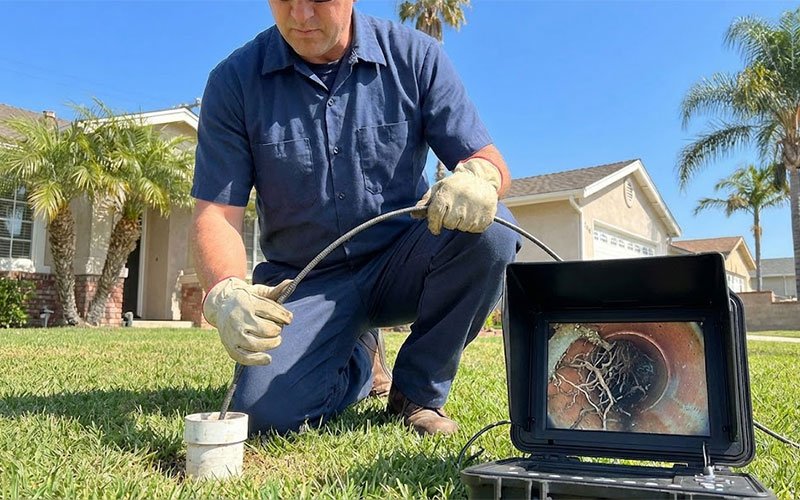
A sewer scope is a specialized inspection where a high-resolution, self-leveling color camera is fed into the home’s main drain line via a “cleanout.” This camera travels through the pipe to the city main, recording video footage of the interior condition.
This is not part of a standard home inspection (which focuses on visible systems). It is an ancillary service that provides a “colonoscopy” for your house. Without it, you are buying the property blind.
Why Los Angeles Homes Are High Risk
While sewer lines can fail anywhere, Los Angeles presents a “perfect storm” of conditions that destroy underground pipes.
1. The Material Age Gap
The vast majority of LA’s housing stock was built before 1970. The materials used back then have long since passed their intended lifespan.
- Vitrified Clay (Pre-1970s): Clay pipes are durable but brittle. They come in short sections (3-4 feet) joined together. Over time, these joints loosen, allowing roots to enter and snap the pipe.
- Cast Iron (Pre-1970s): Used mostly under the house foundation. Cast iron rusts from the inside out. We often see “channeling,” where the bottom of the pipe has completely eroded away, allowing raw sewage to leak into the soil under the house.
- Orangeburg (1940s-1950s): A tar-paper composite used during WWII metal shortages. This material collapses under the weight of soil. If your home was built between 1945 and 1955, assume the sewer line is failed until proven otherwise.
2. The “Ficus” Effect
Los Angeles is famous for its street trees—specifically Ficus and Palm trees. While beautiful, these trees have incredibly aggressive root systems. Roots are drawn to moisture. A tiny hairline crack in a clay pipe releases water vapor into the soil.
The roots sense this, enter the crack, and grow inside the pipe. As they expand, they shatter the clay like glass. A sewer scope can reveal if the line is merely “clogged” (a $200 cleaning) or “infested” (a $15,000 replacement).
3. Seismic Activity
We live in earthquake country. Even small tremors that you don’t feel can shift the soil enough to create an “offset” in your sewer line.
The Offset Problem: An offset occurs when two sections of pipe shift vertically, creating a “step” or lip. Waste hits this lip and stops, causing repeated backups. In severe cases, the offset disconnects the pipe entirely, dumping sewage into the ground.
The Cost Benefit Analysis
We often hear buyers hesitate at the extra cost of a sewer scope (typically $250 – $400). Let’s look at the math.
Scenario A: The Trenchless Repair
If the pipe is damaged but hasn’t collapsed, you might be able to use a “liner” (an epoxy sleeve cured inside the old pipe).
Estimated Cost: $6,000 – $10,000
Scenario B: The Excavation
If the pipe has collapsed or has a severe offset, it must be dug up. If the break is under your driveway, the city street, or a retaining wall, the costs skyrocket.
Estimated Cost: $15,000 – $25,000+
Compared to these numbers, the cost of the inspection is negligible. Furthermore, finding these issues during escrow gives you massive leverage. You can ask the seller to repair the line or credit you the cost of the work.
What About New Flips?
Do not be fooled by a “newly flipped” home. Flippers invest in what you can see: paint, floors, and fixtures. They rarely spend money digging up a sewer line if the toilets still flush.
We have inspected completely remodeled homes in Venice and Culver City where the brand-new marble bathroom was draining into a clay pipe that was 90% blocked by roots. Without a scope, the new owner would have experienced a sewage backup within weeks of moving in.
The Final Verdict
Your home’s plumbing system is like the arteries of a body. If the main artery is blocked, the whole system fails. A sewer scope is the only way to verify the health of that system.
Don’t let a $25,000 surprise ruin your first year of homeownership. When you schedule your general inspection with Los Angeles Home Inspections CA, ask us about adding a sewer scope to your package. It is the smartest money you will spend during escrow.